Choosing the right kitchen knife can change the way you cook every day. If you’ve ever wondered whether a Kiritsuke or a Santoku knife is better for your needs, you’re not alone.
Both knives have unique features that can make your chopping, slicing, and dicing easier—but which one fits your style? You’ll discover the key differences between Kiritsuke and Santoku knives. By the end, you’ll know exactly which knife will sharpen your skills and bring more joy to your cooking.
Keep reading to find out which blade belongs in your kitchen.
Kiritsuke Knife Features
The Kiritsuke knife stands out with unique features that combine style and function. This Japanese blade blends the qualities of slicing and chopping knives. Its design reflects precision and versatility for skilled cooks.
Blade Shape And Design
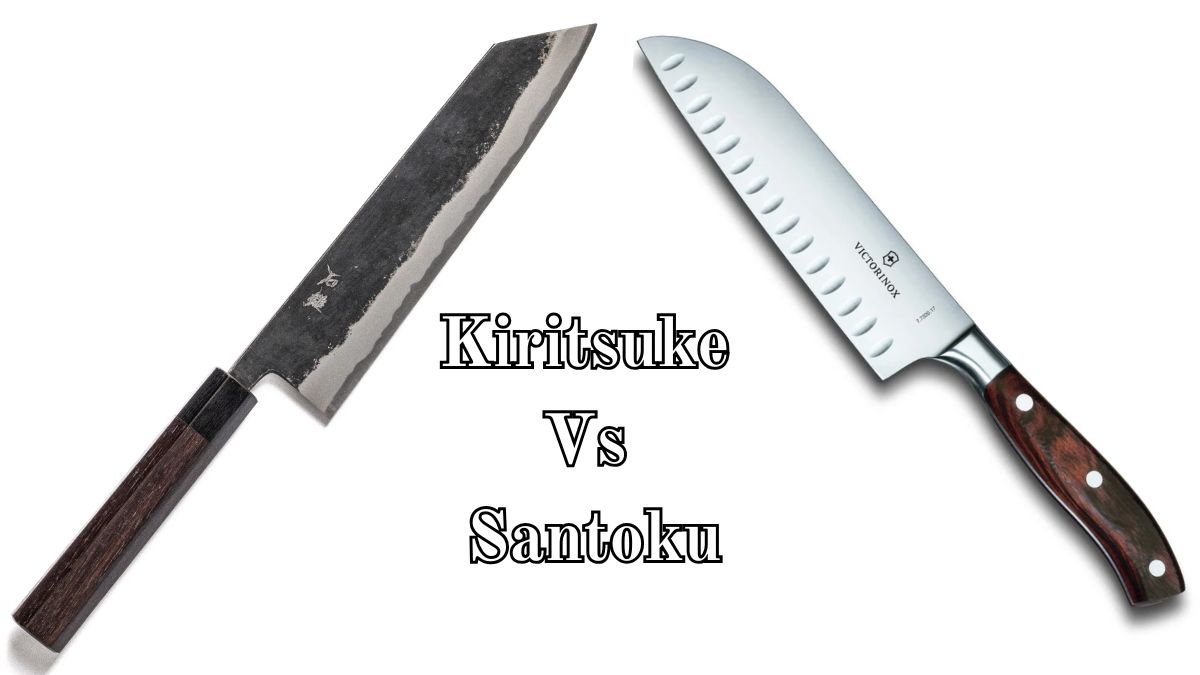
The Kiritsuke blade has a long, flat edge with a sharp tip. Its angled tip differs from rounder blades. This shape allows for both slicing and fine cuts. The blade is usually thin and sharp. It often features a single bevel edge, making it sharper but harder to use for beginners.
Typical Uses In The Kitchen
The Kiritsuke knife suits slicing fish and vegetables with care. It can also handle delicate tasks like filleting. Many chefs use it as a multi-purpose tool. It works well for cutting sashimi or preparing garnishes. Its design supports precise, clean cuts on soft foods.
Advantages And Drawbacks
The Kiritsuke offers precision and elegance in the kitchen. It handles multiple tasks, saving time and tools. The knife’s sharp edge improves cutting accuracy. It looks impressive on any knife set. On the downside, its single bevel edge requires skill to use well. It can be challenging to maintain and sharpen. Not ideal for heavy chopping or hard foods.
Santoku Knife Features
The Santoku knife is a popular kitchen tool known for its versatility. It blends design and function for daily cooking tasks. Chefs and home cooks trust this knife for its balance and ease of use.
Understanding its features helps choose the right knife for your kitchen. The Santoku is distinct in shape and purpose.
Blade Shape And Design
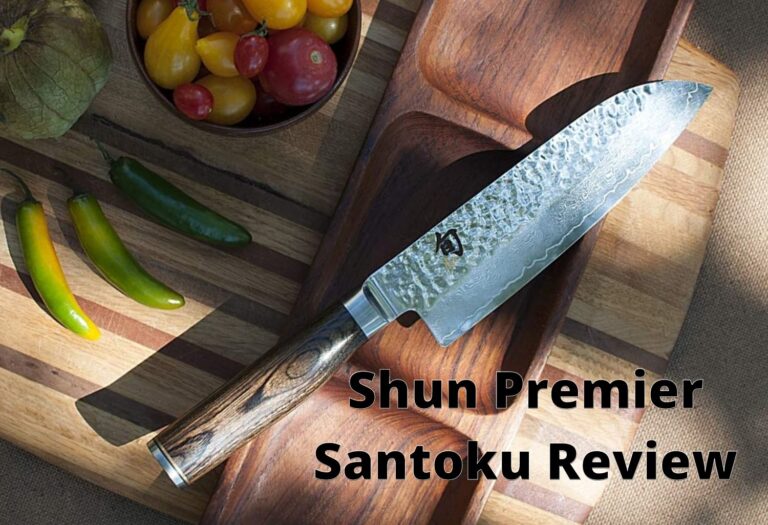
The Santoku blade is shorter and wider than many knives. It usually measures between 5 to 7 inches long. The blade has a flat edge with a slight curve towards the tip. This shape allows precise cuts and smooth chopping. The blade often includes small dimples, called grantons, to reduce food sticking. The handle is designed for comfort and control, fitting well in most hands.
Typical Uses In The Kitchen
Santoku knives excel at slicing, dicing, and mincing. They handle vegetables, fruits, and boneless meats well. The wide blade helps scoop and transfer chopped food. It works best for thin, clean cuts. The knife is ideal for everyday cooking tasks. It suits cooks who want one knife for many uses.
Advantages And Drawbacks
Santoku knives offer great control and precision. They are lightweight, reducing hand fatigue. The flat edge is perfect for chopping on a cutting board. The wide blade protects fingers during use. On the downside, the shorter blade limits cutting large items. The blade’s flat shape is less effective for rocking cuts. Some users find the handle less comfortable for long use.
Comparing Kiritsuke And Santoku
Kiritsuke and Santoku knives are popular choices in many kitchens. Both knives offer unique features and benefits. Understanding their differences helps choose the right knife for specific tasks. This section compares Kiritsuke and Santoku by focusing on blade length, versatility, cutting techniques, maintenance, and durability.
Blade Length And Versatility
The Kiritsuke knife usually has a longer blade, often 8 to 12 inches. This length suits slicing large vegetables and fish. The Santoku knife has a shorter blade, around 5 to 7 inches. It feels lighter and easier to control. Santoku is known for versatility. It can chop, slice, and dice with ease. Kiritsuke is better for precise cuts and thin slices. Both knives serve different kitchen roles well.
Cutting Techniques
The Kiritsuke blade has a straight edge with a sharp tip. This shape supports push cutting and fine slicing. It works well for Japanese-style cooking. Santoku has a slightly curved edge. This shape allows a rocking motion when cutting. Santoku works well for everyday tasks. It handles vegetables, meat, and fish smoothly. Each knife fits different cutting styles and preferences.
Maintenance And Durability
Kiritsuke knives often use harder steel. This makes them sharp longer but harder to sharpen. They need careful maintenance to avoid chipping. Santoku knives use softer steel. They require more frequent sharpening but resist damage better. Both knives need cleaning and drying after use. Proper care extends their life and keeps performance high.
Choosing The Right Knife
Choosing the right knife is key for a good cooking experience. The Kiritsuke and Santoku knives both have their strengths. Picking the best one depends on your cooking style, skill level, and budget. Each knife suits different needs and tasks in the kitchen.
Cooking Style And Preferences
The Kiritsuke knife is great for slicing and fine cuts. It works well with fish and vegetables. The Santoku is more versatile. It handles chopping, dicing, and slicing with ease. If you cook many types of dishes, the Santoku is a solid choice. For precise and delicate work, the Kiritsuke shines.
Skill Level Considerations
Kiritsuke knives require more skill to use well. Their sharp tip and flat edge need care. The Santoku is easier for beginners. It has a balanced shape that helps with control. If you are new to cooking, Santoku offers a gentle learning curve. Experienced cooks may prefer Kiritsuke for its precision.
Budget And Investment
Kiritsuke knives tend to cost more. They are often handmade with premium steel. The Santoku comes in many price ranges. You can find good quality Santoku knives at lower prices. Think about how much you want to spend. A Santoku can give good value without a big investment.
Care Tips For Both Knives
Taking good care of your Kiritsuke and Santoku knives keeps them sharp and safe. Proper care helps these knives last longer and perform better. Both knives need careful attention to maintain their unique edges and shapes.
Sharpening Methods
Use a whetstone to sharpen both knives. Soak the stone in water for about 10 minutes before use. Hold the knife at a 15-degree angle to the stone. Move the blade gently across the stone in a smooth motion. Sharpen both sides evenly to keep the edge balanced. Avoid electric sharpeners, as they can damage the blade.
Storage Solutions
Store knives in a wooden block or magnetic strip. Keep blades separate to prevent them from touching. Avoid tossing knives in a drawer with other utensils. Use blade guards if you must store them in a drawer. Proper storage protects the edge and prevents accidents.
Cleaning Practices
Wash knives by hand with warm, soapy water. Dry them immediately with a soft towel to avoid rust. Do not put knives in the dishwasher. Dishwasher detergents and heat can dull the blades quickly. Clean knives after each use to keep them in top shape.
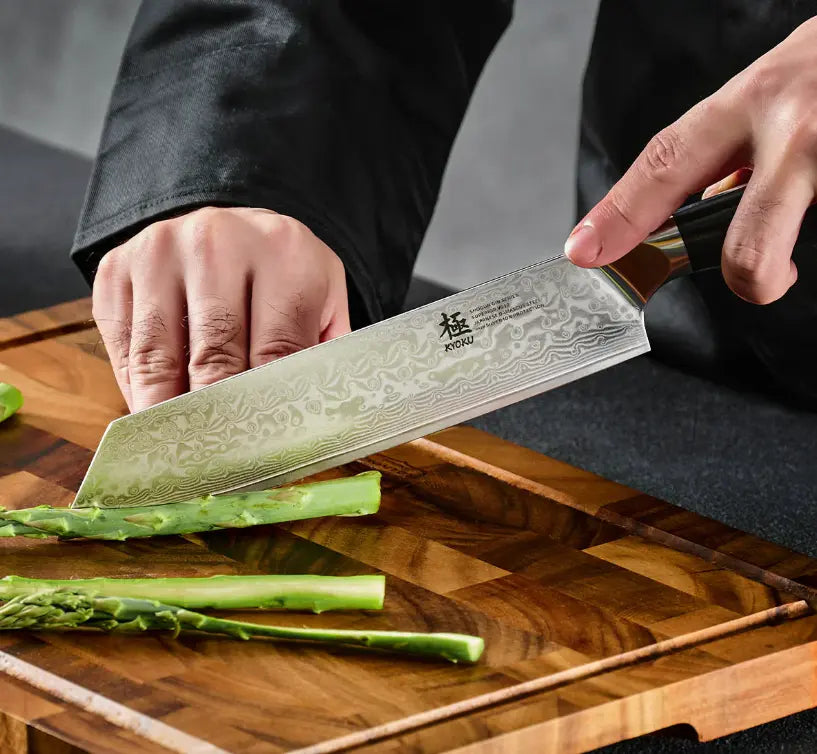
Credit: kyokuknives.com

Credit: santokuknives.co.uk
Frequently Asked Questions
What Is The Main Difference Between Kiritsuke And Santoku Knives?
Kiritsuke knives have a long, angled tip, ideal for slicing and precision. Santoku knives have a rounded tip, perfect for chopping and dicing. Kiritsuke is more specialized, while Santoku offers versatile everyday use in the kitchen.
Which Knife Is Better For Home Cooks, Kiritsuke Or Santoku?
Santoku knives are better for home cooks due to their versatility and ease of use. Kiritsuke knives suit experienced chefs who need precision and style. Santoku handles most kitchen tasks efficiently, making it ideal for everyday cooking.
Can Kiritsuke Knives Replace Santoku Knives In The Kitchen?
Kiritsuke knives can replace Santoku knives but are less versatile. Kiritsuke excels in slicing and precision work but is harder to handle. Santoku knives cover a wider range of tasks, making them more practical for daily use.
How Do Kiritsuke And Santoku Knives Differ In Design?
Kiritsuke knives feature a long, straight edge with a pointed tip. Santoku knives have a shorter, wider blade with a rounded tip. The design difference affects cutting style and task suitability in the kitchen.
Conclusion
Choosing between Kiritsuke and Santoku depends on your cooking style. Kiritsuke suits precise slicing and elegant presentation. Santoku works well for everyday chopping and versatility. Both knives offer unique benefits in the kitchen. Think about what tasks you do most often.
A good knife makes cooking easier and more enjoyable. Try both if you can. See which one feels right in your hand. Your choice will help you cook with confidence and ease.